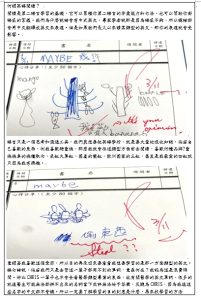
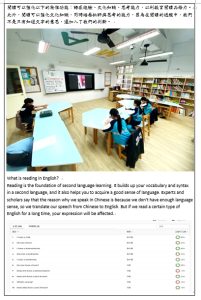
這學期的英語閱讀週,看到孩子們拿著英語閱讀本,讓我想到什麼閱讀?何謂英語閱讀?
閱讀是第二語言學習的基礎,它可以累積你第二語言的字彙能力和句法,也可以幫助你對語感的掌握。我們為什麼說話會有中式英文,專家學者說那是因為語感不夠,所以講話都會用中文翻譯成英文來表達。但是如果我們長久以來讀某類型的英文,那你的表達就會受影響。
語言只是一個思考和溝通工具,我們真想要把英語學好,就是要大量地吸收知識,倘若自己喜歡的東西,例我喜歡騎重機,那麼我就會往這類型方面前去閱讀,喜歡何種品牌?重機機車的機種取向、氣缸大單缸、國產的雙缸、歐洲國家的三缸,甚至是我最愛的四缸就只因為我有興趣。
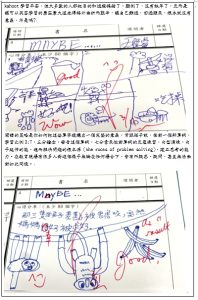
意謂著我喜歡這個章節,所以目的再來回來要看看我想要學習的是那一方面類型的英文。換句話說,倘若我們只是去背這一輩子都用不到的單詞,意義何在?我認為這是浪費時間。好比CHRIS一輩子也不會去看醫學類型專業的東西,故有關醫學的英文單詞、很多的就連醫生可能無法都拼不出來的名詞當下或許無法給予答案,反觀為CHRIS,因為我連這些名字的中文都不會講。所以一定要了解學習的目的到底是什麼,再來找學習的方法kahoot學習平安,但大多數的人都把目的和過程搞錯了、顛倒了,沒有秩序了,反而是讓可以笑容學習的康莊康大道走得格外曲折而艱辛,讓自己難過,回過頭來,根本就沒有意義,不是嗎?
閱讀的策略是你如何把這些單字建構出一個完整的意義,常跟孩子說,面對一個新單詞,學習比例3:7,三分鐘念、發音這個單詞,七分拿來做對單詞的反覆練習,句型演練、句子延伸的能,進而解決問題的根本源(the roots of problem solving),建立思考的能力。在教育現場有很多人對這個樣子無論在任何場合下,會有所疑惑、疑問,甚至無法面對如此冏境。
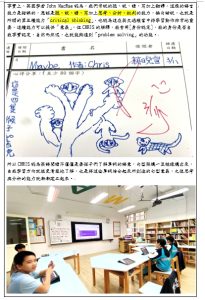
事實上,英國學者John MacRae認為,我們常說的聽、說、讀、寫加上翻譯,這樣的語言能力是錯誤的,應該是聽、說、讀、寫加上思考、分析、批判的能力,換句話說,也就是所謂的第五種能力「critical thinking」,他認為這在英文過程當中持學習動作非常地重要,這種能力可以提供「意義」,但CHRIS的解釋,我會用[身份認定],我的身份是否自我事實認定,自然而然呢,也就能夠達到「problem solving」的功能。
所以CHRIS認為英語閱讀不僅僅是要孩子們了解單詞的語意,句型架構一旦被建構出來,自我學習方向就能更清楚地了解,也是將這些單詞結合起來所創造的句型意義,之後思考與分析的能力就漸漸建立起來。
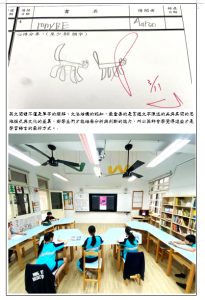
英文閱讀不僅是單字的理解、文法結構的認知,最重要的是掌握文字陳述的美與其間的思維模式與文化的差異,對學生們才能培養分析與判斷的能力,所以英師會學覺得這些才是學習語言的最好方式。
閱讀可以強化以下的幾個功能:語感經驗、文化知識、思考能力,以利教育閱讀品格力。
此外,閱讀可以強化文化知識,同時培養批評與思考的能力,因為在閱讀的過程中,我們不是只有知道文字的意思,還加入了我們的判斷。
What is reading in English?
Reading is the foundation of second language learning. It builds up your vocabulary and syntax in a second language, and it also helps you to acquire a good sense of language. Experts and scholars say that the reason why we speak in Chinese is because we don’t have enough language sense, so we translate our speech from Chinese to English. But if we read a certain type of English for a long time, your expression will be affected.
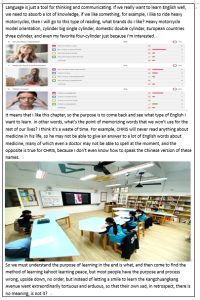
Language is just a tool for thinking and communicating. If we really want to learn English well, we need to absorb a lot of knowledge, if we like something, for example, I like to ride heavy motorcycles, then I will go to this type of reading, what brands do I like? Heavy motorcycle model orientation, cylinder big single cylinder, domestic double cylinder, European countries three cylinder, and even my favorite four-cylinder just because I’m interested.
It means that I like this chapter, so the purpose is to come back and see what type of English I want to learn. In other words, what’s the point of memorizing words that we won’t use for the rest of our lives? I think it’s a waste of time. For example, CHRIS will never read anything about medicine in his life, so he may not be able to give an answer to a lot of English words about medicine, many of which even a doctor may not be able to spell at the moment, and the opposite is true for CHRIS, because I don’t even know how to speak the Chinese version of these names.
So we must understand the purpose of learning in the end is what, and then come to find the method of learning kahoot learning peace, but most people have the purpose and process wrong, upside down, no order, but instead of letting a smile to learn the Kangzhuangkang Avenue went extraordinarily tortuous and arduous, so that their own sad, in retrospect, there is no meaning, is not it?
The strategy of reading is how you construct a complete meaning out of these words, and often tell children, facing a new word, the learning ratio of 3:7, three minutes to read and pronounce the word, seven minutes to do the repeated practice of the word, sentence modeling exercises, sentence extension can, and then solve the roots of problem solving (the roots of problem solving), to establish the ability to think. There are many people in the education field who are puzzled, doubtful, or even unable to face this kind of situation, no matter on any occasion.
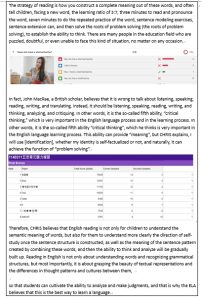
In fact, John MacRae, a British scholar, believes that it is wrong to talk about listening, speaking, reading, writing, and translating. Instead, it should be listening, speaking, reading, writing, and thinking, analyzing, and critiquing. In other words, it is the so-called fifth ability, “critical thinking,” which is very important in the English language process and in the learning process. In other words, it is the so-called fifth ability “critical thinking”, which he thinks is very important in the English language learning process. This ability can provide “meaning”, but CHRIS explains, I will use [identification], whether my identity is self-factualized or not, and naturally, it can achieve the function of “problem solving”.
Therefore, CHRIS believes that English reading is not only for children to understand the semantic meaning of words, but also for them to understand more clearly the direction of self-study once the sentence structure is constructed, as well as the meaning of the sentence pattern created by combining these words, and then the ability to think and analyze will be gradually built up. Reading in English is not only about understanding words and recognizing grammatical structures, but most importantly, it is about grasping the beauty of textual representations and the differences in thought patterns and cultures between them,
so that students can cultivate the ability to analyze and make judgments, and that is why the ELA believes that this is the best way to learn a language.
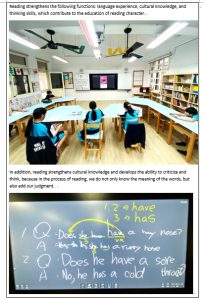
Reading strengthens the following functions: language experience, cultural knowledge, and thinking skills, which contribute to the education of reading character.
In addition, reading strengthens cultural knowledge and develops the ability to criticize and think, because in the process of reading, we do not only know the meaning of the words, but also add our judgment.